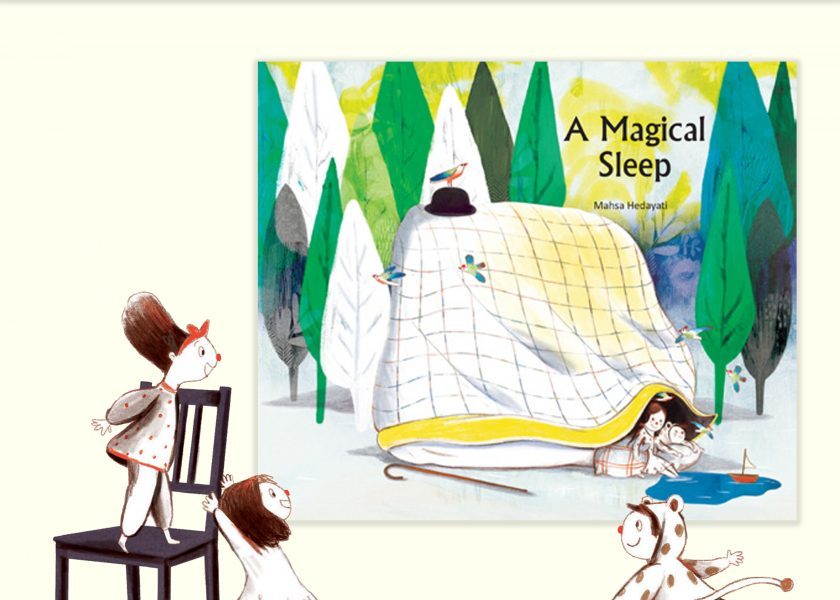
He was chosen by the Children’s Book Council of Iran (IBBY Iran) for his contributions to the development and enrichment of children’s and young adult literature in Iran over the past three decades.
What makes Ahmad Akbarpour’s stories so special is his use of fresh, creative storytelling techniques that engages his readers. He deliberately bends the rules of traditional storytelling, giving ordinary characters a voice that stands out.
He focuses on universal themes like peace, friendship, acceptance, and more, without falling into the trap of predictable, cliché plots. His works span a wide range of genres, from light-hearted humor and fantasy to grounded, realistic stories, as well as historical and mythical tales. He also conducts storytelling workshops for both kids and adults.
Ahmad Akbarpour’s books have been translated into many languages, reaching readers not only in Iran but across the world. His stories are loaded with wonder and magic, and never fail to captivate readers of all ages.
TUTI Books has proudly published the following titles written by him:
“You Are an Explorer” Wins the 2025 Openbook Best Book Award: Children’s Book of the Year!
A heartfelt thank you to the jury for this incredible honor!
Congratulations to Shahrzad Shahrjerdi and Ghazal Fatollahi!
Reviewer’s Recommendation
Xie Hongwen (Final Judge, Children’s Literature Writer and Researcher)
The story begins in a bombed-out home littered with items such as an adventure hat, a globe, and a map. These images reveal what the text doesn’t explain: they represent the older brother’s hobbies and dreams. He and his younger sister imagine their escape as an adventure. In reality, their escape is fraught with danger, a tense atmosphere lurking everywhere.
At first glance, this book seems to depict war in a lighthearted way, with the illustrations mostly in black and white sketches, presenting the desolation and bleakness after the war, with only the clothes and hats of the protagonist siblings having color. However, it is precisely because of the deliberate silence and the simple and uncomplicated colors that we are more focused on watching their “adventure” encounters.
Other colored areas in the image, such as the flames rising from the houses and cars, symbolize the recent bomb attack; while the flames from the wood-burning fire the siblings make in the darkness are a dim red, implying that their small power may be extinguished at any moment.
What qualities does an explorer need? To carry their home on their back like a snail, to run faster than a horse, to know how to sail… The older brother recounts these experiences along the way, encouraging his vulnerable younger sister, soothing her fears and anxieties, and, more importantly, strengthening his own resolve. Like the Batman logo on his clothes, perhaps subconsciously he’s always fantasizing about being a hero; before saving the world, at least he needs to rescue himself and his sister safely!
The flames of war are not far removed from reality. Reading about the brother and sister’s childlike adventure is like watching the Italian film *Life Is Beautiful*, where they confront the hardships of reality with pure hearts. When they finally arrive at the refugee camp and have the opportunity to start a new life, it’s like discovering a treasure at the end of an adventure—something worth cherishing and protecting. The entire book is presented in bright colors until the page about the sister at school, with green paper cranes representing prayers for peace, creating a striking visual effect.
The brother and sister’s mutual support throughout their journey is reminiscent of the Japanese anime *Grave of the Fireflies*. These artworks share similar themes, and their moving stories and humanitarian concerns can be compared and contrasted. *You Are the Explorer*, with its author and illustrator both from Tehran, is a rare Iranian work published in Taiwanese children’s books. The book reflects the current state of affairs in the world, prompting deep reflection and compassion, making it all the more precious and valuable!
Checkout the book’s page on the Awards website here, to discover the author and the illustrator’s speeches.
Originally written in Farsi by Payam Ebrahimi and illustrated by Ghazaleh Bigdelou, this picture book is a piece of black humor targeting educational systems insisting on excellence, uniformity, and mastery.
Congratulations to Payam Ebrahimi and Ghazaleh Bigdelou!
TUTI’s titles previously selected by the White Ravens list:
The international jury of the Biennial of Illustration Bratislava has selected “The Roc Girl“, illustrated by Noushin Sadeghian, as the Grand Prix winner!
In the 30th edition of this biennial, “The Roc Girl“, rewritten by Ahmad Akbarpour and illustrated by Nooshin Sadeghian, won the Grand Prix Award.
This title, originally published in Farsi by TUTI Books, in collaboration with the Museum of Iranian Dolls & Culture, was nominated by the Institute for the Intellectual Development of Children and Young Adults as Iran’s representative in this global competition.
“The Roc Girl” has received many prestigious honors and awards for its illustrations so far:
❇️ Selected for the White Ravens Catalog,
❇️ Selected for the Nami Island Concours,
❇️ Winner of Sharjah Book Illustration Exhibition,
❇️ Winner of the Chen Bochui Award,
❇️ Winner of the Illustrators Exhibition of Bologna,
❇️ Winner of the Grand Jury Prize of 2022 BIBF Ananas Illustration Exhibition
Congratulations to Noushin Sadeghian and TUTI Books team!
The monster is one of the imaginary creatures that has a long history in children’s culture and literature. It creates fear, which has made it a tool for adults to control children and their mischief. However, in modern children’s literature, the monster has changed. Instead of being scary, it has become a friendly character, and in many stories, the monster and the child learn to coexist. The phrase “kind monster” is probably the most common way to describe this new relationship.
Formalists believe that the technique of making something feel unfamiliar loses its impact over time. So, “a new form comes in to replace the old one that no longer works.” Today, “kind monster” might not surprise children like it did a decade or two ago. It seems that the idea of the monster needs fresh ways to shake off the audience’s familiarity. The story “A Kiss for the Monster,” written by AliAsghar Seyyedabadi and illustrated by Reza Dalvand, is a great example of this.
In this story, the monster both exists and doesn’t exist. It exists as a shared idea between the father and son characters but doesn’t act as a traditional character. Thus, even though the monster keeps its classic traits, it becomes more of a playful concept.
2 “A Kiss for the Monster” is not focused on specific characters. The father and son are unnamed, representing general types: the parent and the child.
The theme and plot of the story are broader than needing unique characters. Even the fact that they are a father and son does not significantly impact the plot; it just fits better with their physical actions than if they were a mother and daughter. The story is relatable for all parents and children, regardless of their differences.
“A Kiss for the Monster” tells the story of how a parent and child connect through a playful game, ultimately leading to an emotional bond. The story has three key features:
Enjoyable Reading: The excitement and emotions in the text make it fun for readers, drawing them in.
Playful Nature: The story encourages a playful atmosphere, enhancing the enjoyment of the reading experience.
Memorable Impact: The combination of humor and heartfelt moments makes the story stick in the minds of readers.
A boy asks his father to play “monster” together. The father agrees, raises his hands like a monster, and says, “I’m going to eat you now!” The boy feels a bit scared but replies, “You can’t eat me because I’m a monster eater!” The father then gets scared and asks, “What does a monster eater look like?” The boy responds, “Like this!” referring to an illustration. The father insists he can’t be eaten because “I am a monster eater eater.” The story continues with playful dialogues and actions between the father and son, ending with hugs and kisses filled with laughter.
3 It’s hard to separate the story from the game in “A Kiss for the Monster.” It tells a narrative about a game and is also a game dressed in a story. The story can be easily performed anywhere, making it inviting to play, but not just any play. It focuses on a specific game that fosters connection and interaction between the players, specifically the parent and child. Their interaction helps create a safe and nurturing bond.
For these reasons, “A Kiss for the Monster” can be explored in terms of how interpersonal relationships impact children’s growth. The experiences children have with their parents can lead to either secure or insecure relationships, which affect their development.
4 The formation of a “secure bond between parent and child” that leads to mental growth can be seen in “A Kiss for the Monster.” This bond has key features:
Emotion: Emotions play a vital role. While emotions are often seen negatively, they are essential for healthy brain development and relationships.
Connection: The emotional connection between the parent and child helps shape the child’s brain. In the story, the father’s playful monster act brings excitement, and the boy responds with a mix of fear and fun.
Repetition: The story uses repetition to help young readers process events and understand the meaning, creating excitement with each cycle of action and reaction.
The story concludes with a strong emotional bond between the father and son. This ending is not sudden; it builds up as negative feelings of fear turn into positive emotions of laughter, leading to a happy conclusion.
5 The audience experiences all these hidden processes within the text. The relationship between the words and the illustrations plays an important role in this experience. Each time the story asks, “What does a monster eater look like?” the words remain silent, and the images provide the answer, creating a lively interaction.
Emotion, affection, physical movements, and the tone of the characters’ actions all engage the child’s mind. The story encourages imagination, allowing young readers to connect with the characters and their feelings.
In conclusion, the effects of establishing a secure bond between parent and child in early life last beyond those years. These magical moments of connection will remain significant throughout a child’s life. With such a bond, today’s child will grow into a caring adult, not just an ordinary monster kisser but a “professional” one, even when faced with life’s challenges.
Translated into English from Yashar Hodaei’s review
We were honored to be invited to a recent roundtable discussion focused on the continuity of classic children’s literature. The event was moderated by Mikhail Viesel, the renowned translator, critic, and author, who is also the editor-in-chief.
The discussion held on 2024-12-06, featured an esteemed panel of speakers, including:
Natalia Kostyushina: Head of the Center for Bibliography of Children’s Literature at the Russian State Children’s Library.
Anastasia Orlova: Children’s poet, writer, translator, and publisher.
Sofia Remez: Children’s writer.
Daniela Pareschi: Children’s writer and illustrator.
Ali Asgari: Representative from Houpa Publishing House.
Shiva Azimi: Representative from TUTI Books Publishing House.
Key Highlights from the TUTI Books’ Speech on Why Classic Children’s Literature Still Matters:
Connection to Heritage: Classic literature serves as a bridge to the past, helping children understand historical struggles and triumphs, grounding them in their cultural heritage.
Broadening Perspectives: These stories expose young readers to diverse cultures, fostering empathy and understanding—essential qualities in our interconnected world.
Critical Thinking: Engaging with complex themes in classic literature encourages children to think critically and engage in meaningful conversations about love, justice, and identity.
Language Skills: Reading well-crafted prose enhances vocabulary and communication skills, reminding us of the beauty of language in an age of brevity.
Imagination and Creativity: Classic tales ignite imagination, transporting readers to fantastical worlds and inspiring innovative thinking—crucial in today’s rapidly changing environment.
Richness of Iranian Literature: The richness of Iranian literature has led to numerous excellent rewritings and spin-offs, presenting these masterpieces to younger audiences in engaging ways. TUTI has always dedicated a part of its portfolio to this endeavor, featuring works from talented authors like Ahmad Akbarpour, Mohammadreza Shams, and Farhad Hasanzadeh.
Conclusion In conclusion, immersing children in classic literature equips them with valuable tools for personal growth and a deeper appreciation of the human experience. By sharing these enduring narratives, we can ensure that their profound insights continue to resonate for generations to come.
At the opening of Illustration Week, the Iranian Illustrators Association proudly awarded the Aban Badge to the talented Maryam Tahmasbiin the Emerging Talent category.
The Aban Badge is not just an artistic accolade; it represents a prestigious recognition of the illustration profession in Iran. Awarded annually to four distinguished figures across various categories, this badge acknowledges those who have significantly contributed to establishing and strengthening the foundations of the illustration field.
The Iranian Illustrators Association specifically seeks out emerging artists among its members, favoring those who demonstrate originality and creativity. Maryam has proven herself to be a trailblazer, showcasing exceptional qualities that set her apart from her peers and inspiring fellow illustrators to explore new paths.
We extend our heartfelt congratulations to Maryam Tahmasbi on receiving the Aban Badge and wish continued success to all illustrators in their artistic journeys!
“The Roc Girl” is selected for the prestigious WHITE RAVENS list 2024!
Originally written in Farsi by Ahmad Akbarpour and illustrated by Noushin Sadeghian, this picture book is a glorious medley of magic, love, legend, and fate.
In a tale woven with magic and longing, a couple’s dream of parenthood is realized when a hakim gifts them a mysterious bird egg to nurture for forty days. However, doubt leads the husband to discard the egg, only for a majestic roc to swoop in, hatching a beautiful girl under its watchful care. As a prince seeks her hand, a wicked witch plots to tear them apart. Stranded and vulnerable, the roc girl’s cries for help resonate through the melody of a shepherd’s reed. Join this enchanting journey where love, resilience, and destiny conquer deceit.
Honors & Awards
Selected for the Nami Island Concours
Winner of Illustrators Exhibition of Bologna
Winner of Sharjah Book Illustration Exhibition
Winner of the Chen Bochui Award
Winner of the Grand Jury Prize of 2022 BIBF Ananas Illustration Exhibition
Congratulations to Ahmad Akbarpour, Noushin Sadeghian, and Iran Dolls Museum!
TUTI’s titles previously selected by the White Ravens list:
Hoda Haddadi, has been working in children’s literature for over 20 years. She’s known for her creative illustrations and unique designs that show women and nature. She has also held art workshops and published books in different countries. Because of her hard work, she is nominated for the ALMA award. She has illustrated “Auntie Beetle” for TUTI Books amazingly.
Ahmad Akbarpour, is nominated for his fresh ideas and funny, fantasy stories. He has written for children with special needs and focused on values like peace and friendship. He has also led storytelling workshops, making him a strong candidate for the ALMA award. He has written many titles for TUTI Books including: “I’m a Scarecrow, But I’m Scared“, “The Roc Girl“, “Wedding with the Sun“, “The Pomegranate Girl“, and “The Open-Ended Stories” chapter book series.
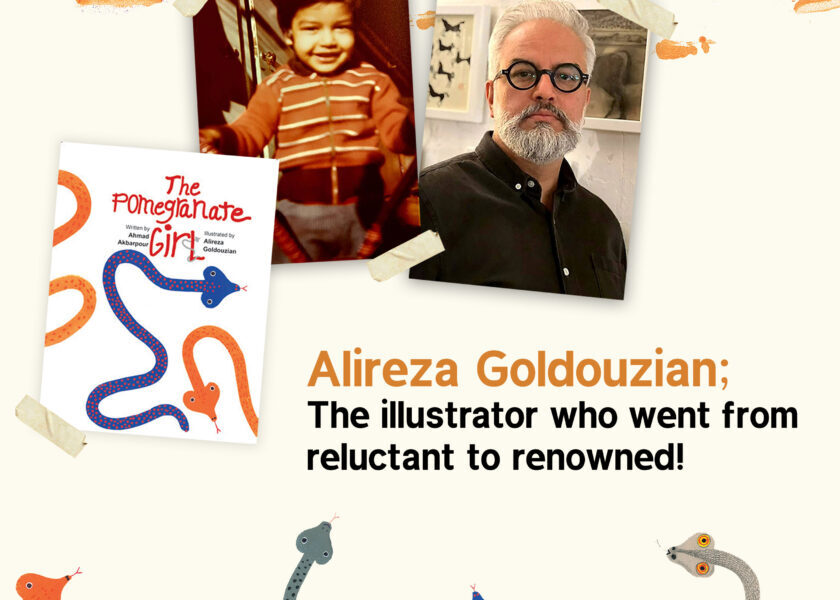
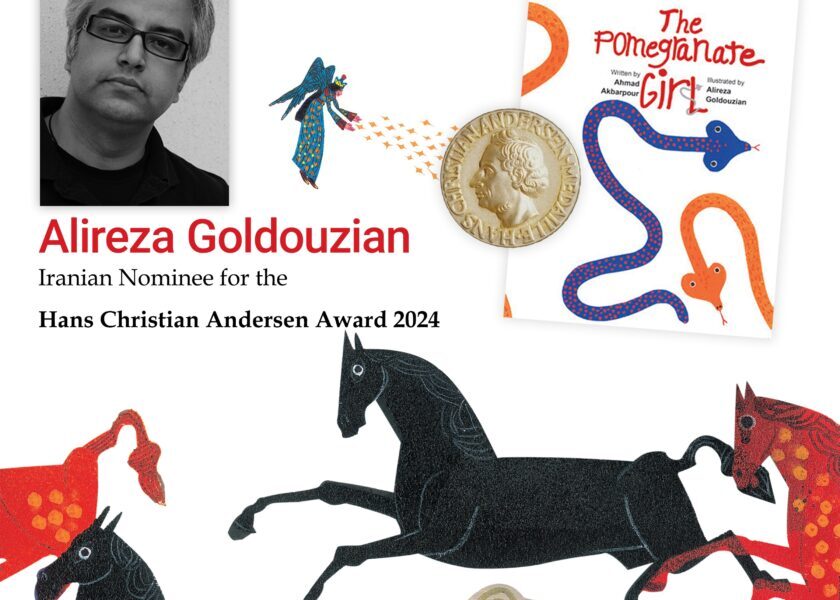
Alireza Goldouzian, has been illustrating children’s books for over 20 years. His artwork is known for being beautiful and powerful, and he has won many awards. His work helps inspire young illustrators, which is why he is also nominated for the ALMA award. He has illustrated “The Pomegranate Girl” for TUTI Books brilliantly.
The Swedish government started this award in 2002 in memory of Astrid Lindgren, a beloved author. The ALMA award is given to people or organizations that greatly contribute to children’s literature. Each year, over 250 candidates from around the world are nominated.
Massoud Nasseri Daryai, Ali Golshan, and our wonderful friends hosted a vibrant celebration filled with colors and narratives. It was the perfect occasion to dive into the captivating stories of Iran’s ethnic groups.
Massoud Nasseri Daryai unveiled “The Roc Girl” and “The Pomegranate Girl” by sharing insights into the inspiration behind this collection—a reflection of the worldview and thoughts of Iranian tribes, highlighting the powerful roles of women and girls.
Massoud Nasseri Daryai
Ali Golshan then spoke about the origins of these tales, drawing parallels with similar stories from cultures around the world, including a captivating tale from Mazandaran reminiscent of “The Roc Girl”.
Ali Golshan
Sahar Tahandeh, the director of TUTI Books, emphasized the importance of paying attention to details in storytelling and illustrations, highlighting the sensitivity of TUTI Books in producing this collection.
Sahar Tarhandeh
Ahmad Akbarpour, with his charming wit, shared his long-standing love for fables and discussed the significance of rewriting these tales properly for children and teenagers.
Ahmad Akbarpour
Alireza Goldouzian also described his unlike condition while illustrating “The Pomegranate Girl”, stressing the importance of his respect for the culture, attire, and customs of the Fars region.
Alireza Goldouzian
Though Noushin Sadeghian couldn’t be present, she joined us via a heartfelt video message.
Noushin Sadeghian’s Video Message
The event concluded with a visit to the installation of “The Roc Girl” and a captivating storytelling session by Parisa Behabadi.
Parisa Behabadi
It was truly a memorable experience, and we wish you could have joined us!